
-
No Number, New Finish
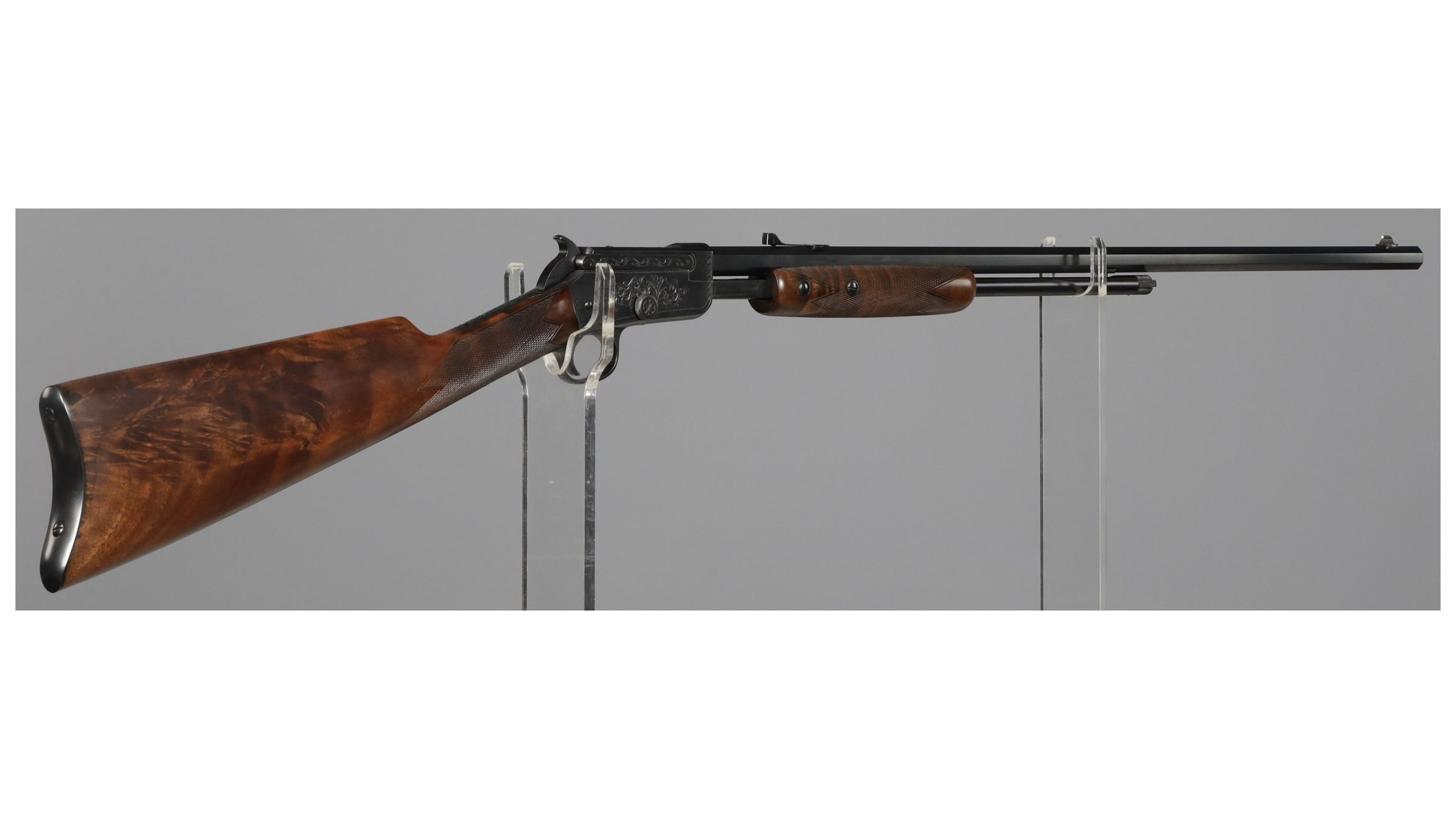
Every rifle we have looked at in this series has come with at least one solid anchor. A factory letter with a shipping date. A serial number that places it in a known production window. An original surface that can be read for what it is. Usually two of the three. This engraved Marlin Model 20 arrives with none of …
-
Nelva Bedore’s Rifle: The Only Known Engraved Marlin Model 38
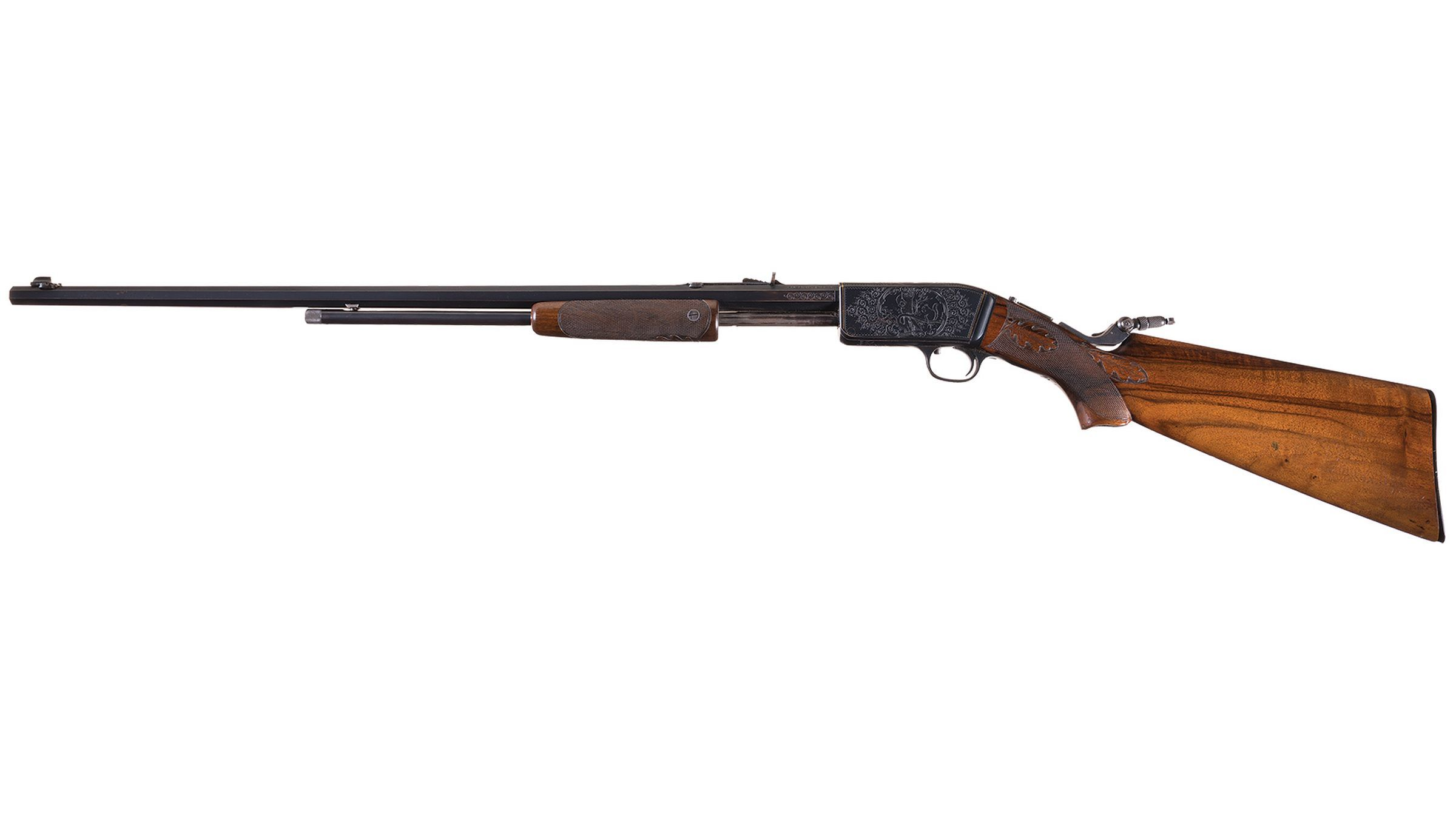
On October 2, 1989, a national accounts manager at Remington sat down and wrote a letter to a man at a competing company about a rifle his grandmother owned. E. D. Bedore, Remington Arms Company, to William S. Brophy at Marlin, October 2, 1989. Bedore encloses photographs of his grandmother’s Model 38, reports that she won it at an exhibition …
-
The Other End of the Order Sheet

Marlin once ran an advertisement that laid the whole proposition out in two sentences. The first insisted that every Marlin rifle, however severely plain, carried the same guarantee as the most expensive arm ever made. The second offered an alternative: if you wanted not only a rifle but a work of art, write for the book of engravings. Marlin Fire …
-
Ordered Plain, Kept Perfect: A Documented Marlin Model 1897
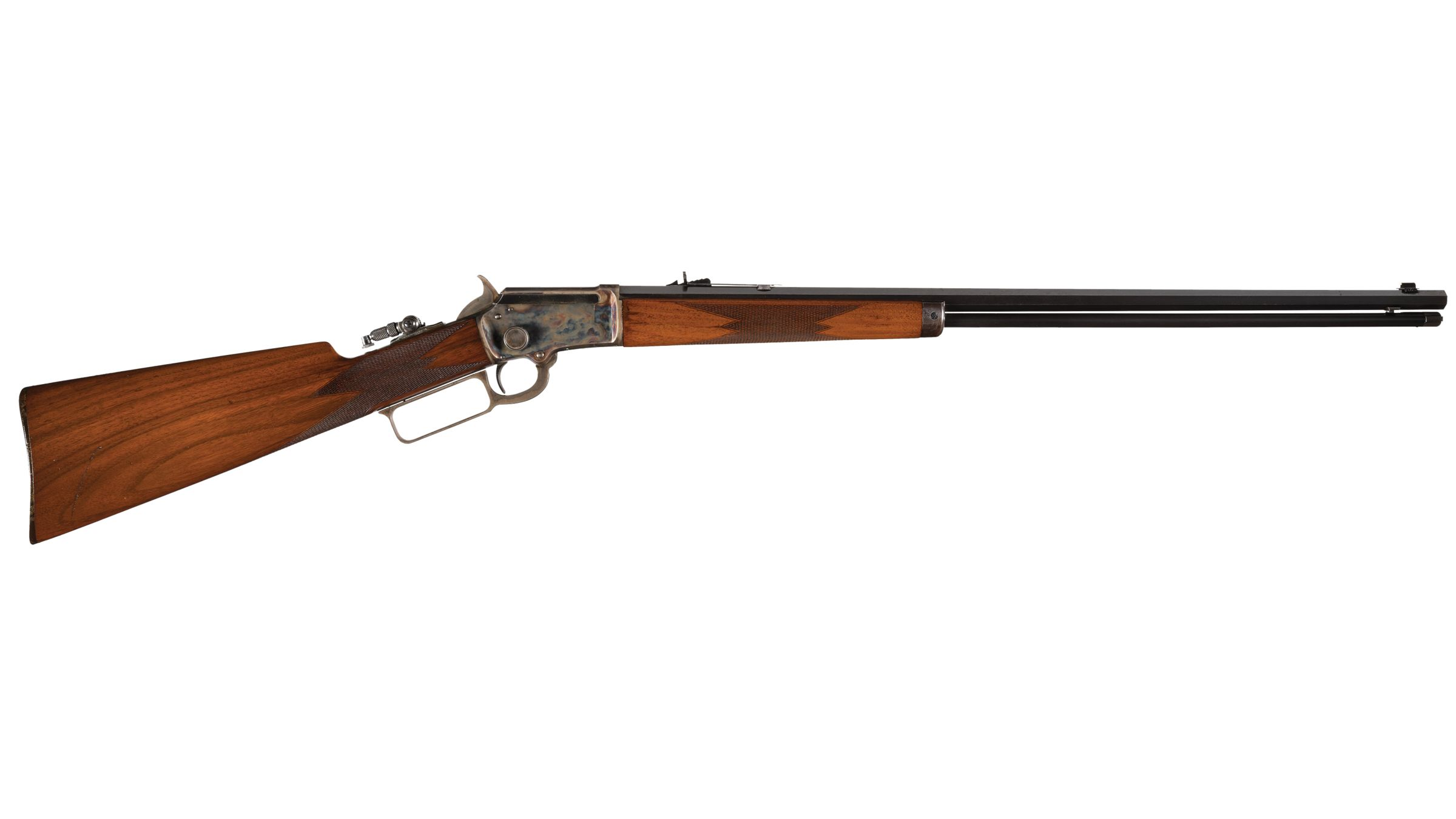
Collecting has a bias toward the extreme. The rifles that get photographed, written up and remembered are the ones at the top of the order sheet — gold inlay, panel scenes, exhibition walnut, a factory letter listing half a page of extras. That bias is understandable. It is also a distortion, because for every rifle that left New Haven wearing …
-
What Perfection Looks Like After 129 Years
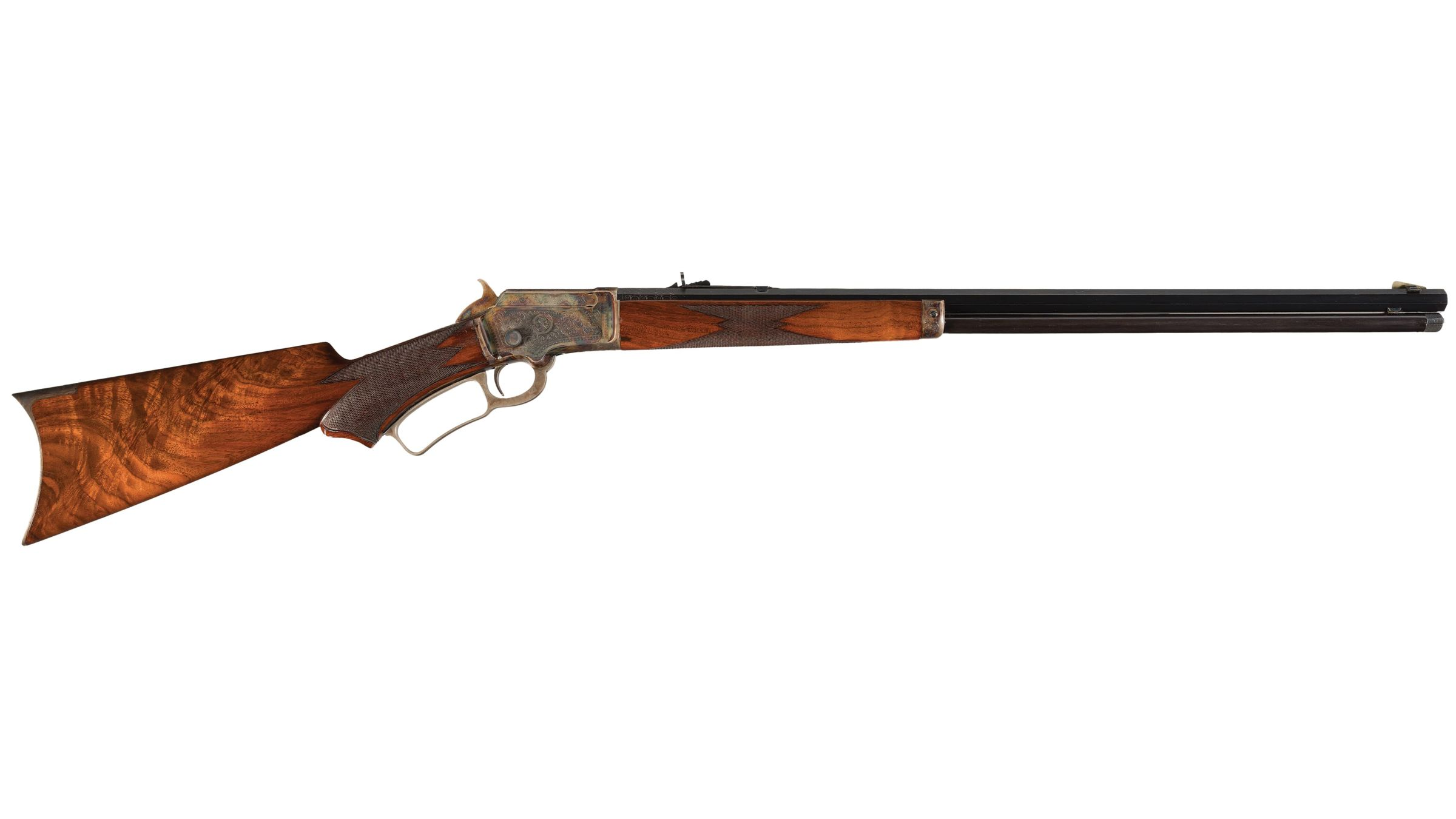
Most surviving nineteenth-century Marlin rifles carry the accumulated evidence of their long lives. Blue that has thinned to grey. Case colors that have faded to smoky brown. Checkering worn smooth in the palm of the grip. Even the best-preserved examples usually show some evidence of the century-plus they have been in circulation. Then there are rifles like this one. Serial …
-
The Canvas That Lasted One Year
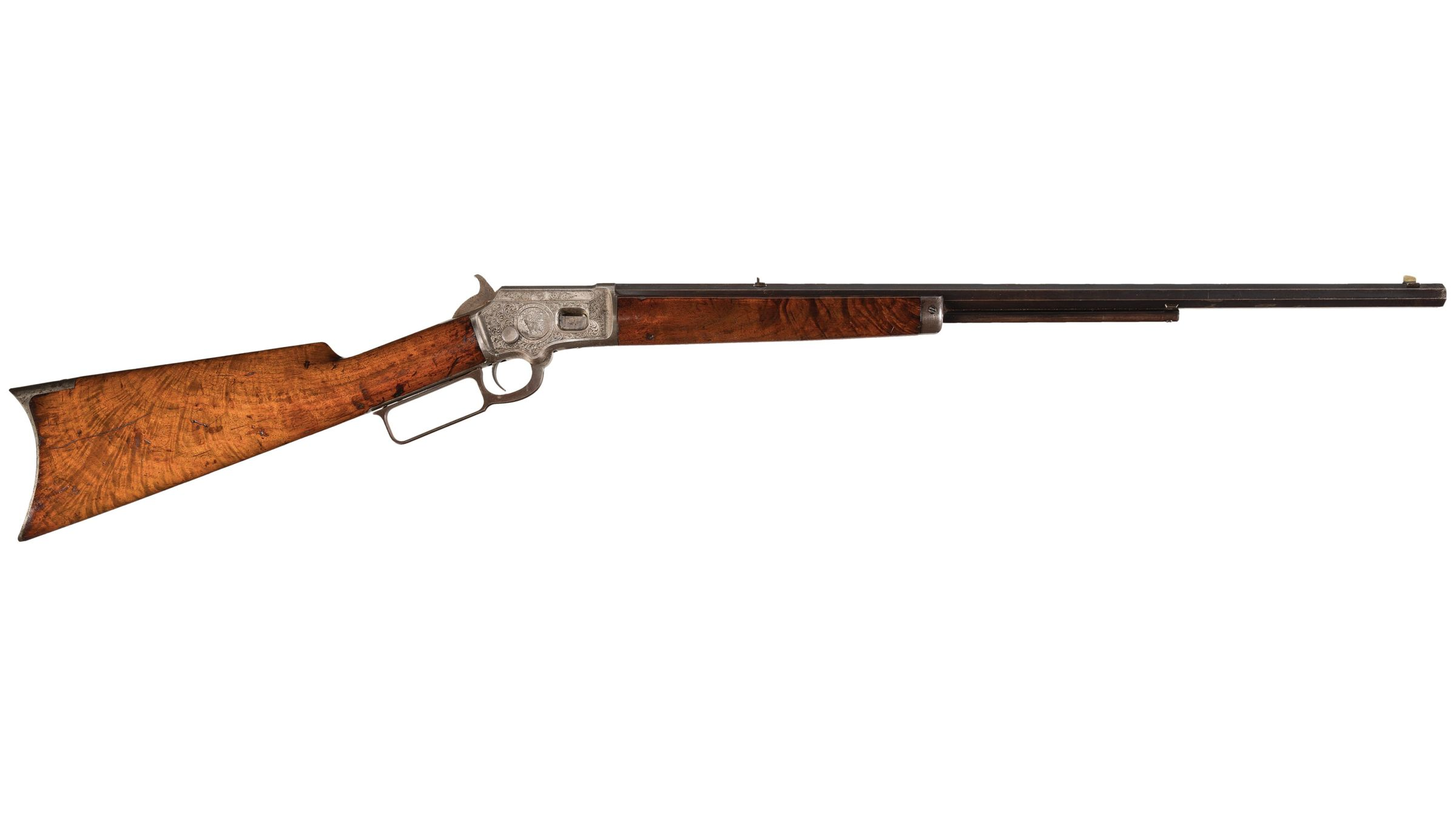
Schoverling, Daly & Gales advertisement, Outing magazine, September 1891. The rifle illustrated is a first variation: side loading gate, half magazine, straight grip. The selling point in the copy is not accuracy or finish — it is that the side plate comes off with a thumb screw. Public domain. In September 1891, a New York sporting goods house named Schoverling, …
-
After the Guns Fell Silent: A Factory Engraved Marlin Model 39
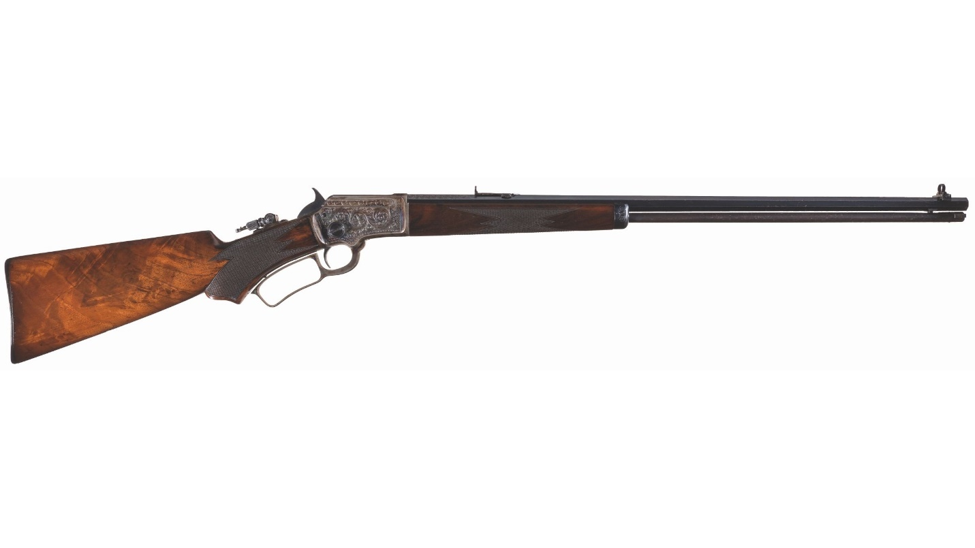
On November 11, 1918, the guns fell silent across Europe. For the Marlin Firearms Company in New Haven, Connecticut, the Armistice meant something else entirely: the end of a lucrative wartime machine gun contract — and the beginning of a corporate crisis that would reshape how the company built rifles. The New York Times, November 11, 1918. The end of…
-
Marlin Model 56 & 57
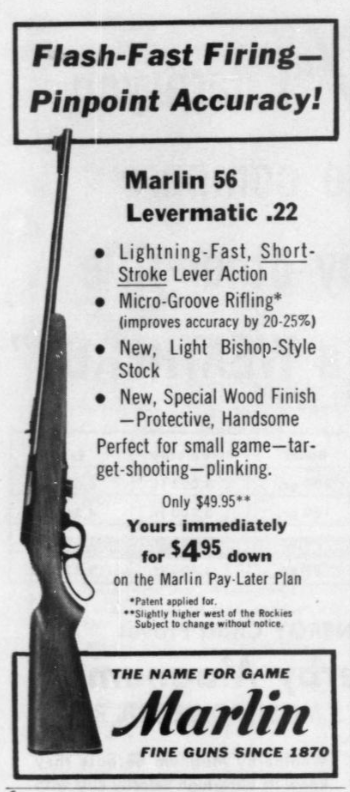
Advertisement from Outdoor Life Magazine, July, 1957 What do you do when your flagship lever-action .22, the venerable Model 39, is pricing families out of the market? In 1955, if you’re Marlin, you license a clever cam-and-roller system from a defunct shotgun manufacturer and build something entirely new. The Marlin Model 56 and 57 represented Marlin’s boldest departure from traditional …
-
Marlin No. 37
When John F. Moran bought Marlin as a part of corporate divestitures following WWI he renamed the company Marlin Firearms Corporation and quickly rebranded many of the company’s prior models, including the trusty No. 20 as the No. 37. Alongside the also-rebranded Model 38 and flagship Model 39, the freshly minted No. 37 represented Marlin’s entry-level .22-caliber rifle, and one-third …
-
Marlin Model 65
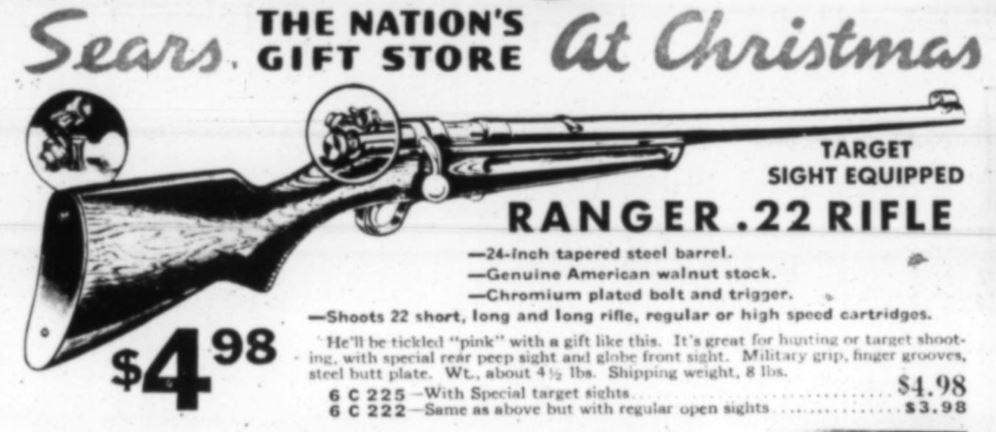
The Marlin Model 65 was a fantastic single shot .22 bolt action, part of the trifecta of rifles that Marlin introduced in 1935 that included the Model 80 and Model 100. Walnut stocked with a schnabel forend and finger grooves, it was a quality rifle with a self-cocking bolt, nestled firmly between the manually cocked Model 100 and the magazine …